
Why Your Kona Coffee Tastes Flat (And How to Fix It)

If your Kona coffee tastes flat, the cause is usually not just one thing. It often comes down to the coffee itself, the way it was roasted, the water you use, and how you brew it. A few small adjustments can make a disappointing cup taste much more alive.
You wake up early. You open a fresh bag of Kona coffee. It smells incredible.
You brew a cup, sit down with your morning reading, take a sip—
…and it’s disappointing.
Flat. Quiet. Nothing like what you expected.

Kona coffee has the potential to be vibrant and layered, but getting there depends on a few key factors—before, during, and after brewing.
1. The Coffee Itself

Not all beans inside a bag of coffee are equal, even if the aroma is promising.
Some beans never fully develop the sugars needed to produce a vibrant cup. This often comes from immature cherries that were picked too early, before they had time to fully ripen.
In some cases, insect damage can also interrupt development. Pests like the coffee berry borer can bore into the cherry and affect how the seed forms, leading to beans that lack internal structure and sweetness.
After roasting, these can show up as pale, yellowish beans known as quakers. Instead of contributing to the cup, they tend to taste peanut-like, hollow, or simply flat.
Even a small number of these beans can noticeably reduce the clarity and liveliness of your coffee.
This is why careful cherry selection and green sorting matter just as much as roasting. At BerryBird Coffee, we pay close attention to these details because the final cup begins long before brewing.
2. Roast Level and Freshness

Different people prefer different roast levels, and that is completely valid.
But roast level does change how the coffee behaves.
Darker roasts tend to have a more broken-down structure. Oils move toward the surface, and the coffee tends to age faster. When they pass their peak, they can lose clarity and feel a bit quiet in the cup.
Lighter roasts hold their structure longer and often stay more stable over time.
If a darker roast tastes flat, sometimes it is not the brew. It may simply be a little past where it shines best.
3. Water Matters More Than You Think

Coffee is mostly water, so the water you use shapes the cup more than most people expect.
Water with very little mineral content can make coffee taste lifeless. Water with too much mineral content can mute the flavors and make the cup feel heavier than it should.
Somewhere in the middle tends to work best. Balanced water allows the coffee to express itself without being pushed too far in either direction.
If your coffee tastes flat and you have already adjusted the beans and brewing, water is one of the first things worth looking at.
4. Temperature and Extraction
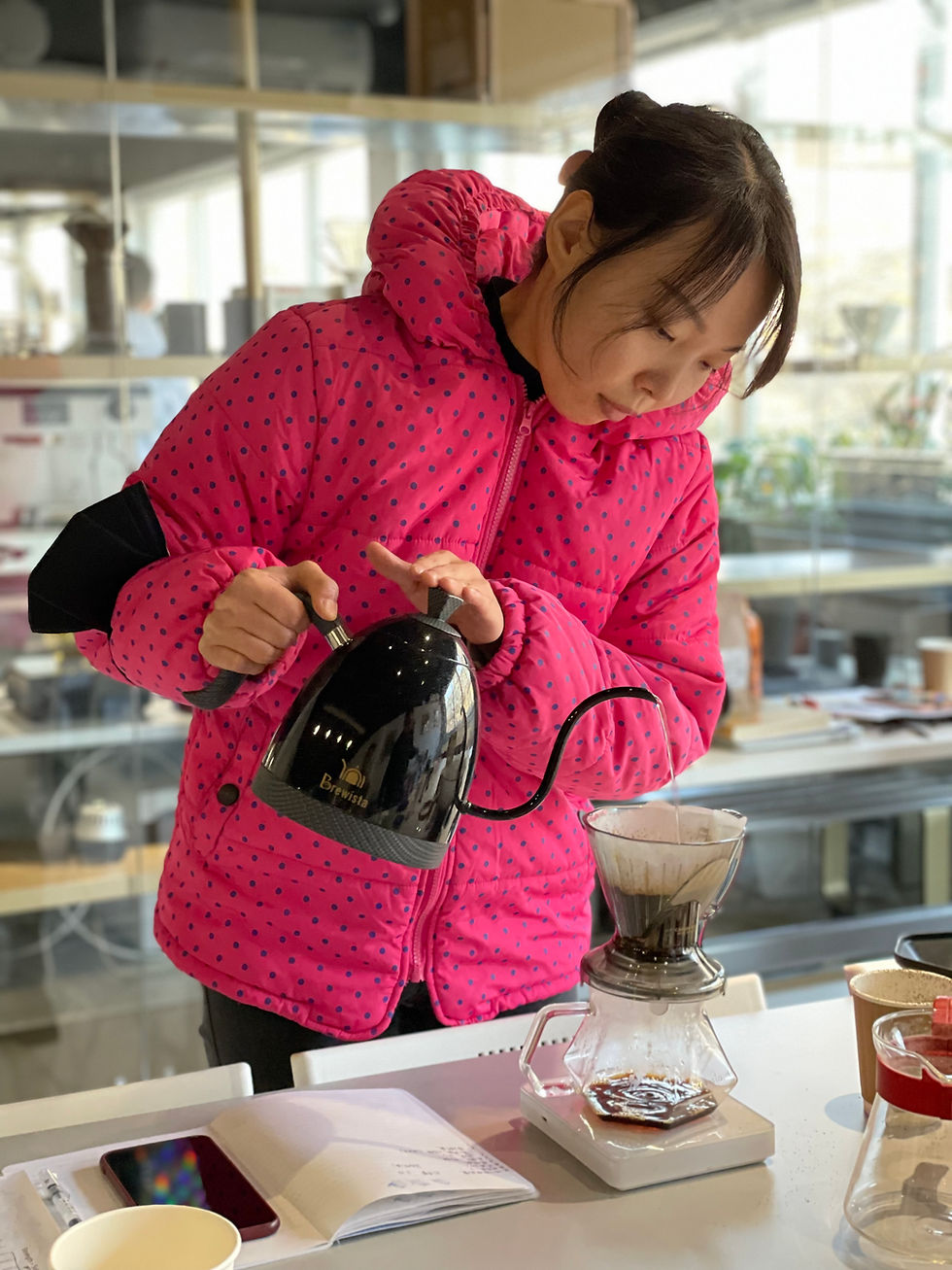
Brewing temperature influences how flavors are released, but it is not a fixed number.
Lower temperatures, around 85–90°C, tend to extract more gently. With darker roasts or immersion methods like French press, this can bring out a fuller, rounder cup without pulling too much bitterness.
Higher temperatures, closer to 90–96°C, extract more efficiently. They can help bring out clarity and brightness, especially in lighter roasts.
If your coffee tastes flat, it may be under-extracted, but increasing temperature is only one way to adjust. Grind size, ratio, and time all shape the result as well.
5. Your Brew Ratio
This is one of the easiest places to lose clarity.
If you are measuring with spoons, it is hard to stay consistent.
A simple starting point is a 1:16 ratio, which means 1 gram of coffee to 16 ml of water.
If the ratio stretches too far, the cup can become thin, watery, and quiet.
Using a small scale can make a bigger difference than most people expect. If you want to know how to make coffee taste better at home, this is one of the simplest places to start.
6. One Small Thing People Overlook
If you have just eaten something spicy, your palate shifts.
Coffee can start to taste more savory, less defined, and sometimes even slightly like MSG.
It is not the coffee changing. It is your perception of it.
The Underlying Truth
If your coffee tastes flat, it is usually not caused by one single mistake.
It is often a combination of:
the coffee itself
how it was roasted
the water
and how it is brewed
And underneath all of this, there is something deeper:
The structure of the coffee bean changes during roasting, and that structure affects how flavor is released during brewing.
We will go deeper into that in another post.
Final Thoughts

A good Kona coffee should not just smell good.
It should feel alive in the cup—clear, structured, and expressive.
If it does not, something in the chain is holding it back. The good news is that flat-tasting coffee can often be improved once you know where to look.


Comments